
EN
About DPI
R&D
Manufacturing Capabilities
Products
Newsroom
CSR
Career

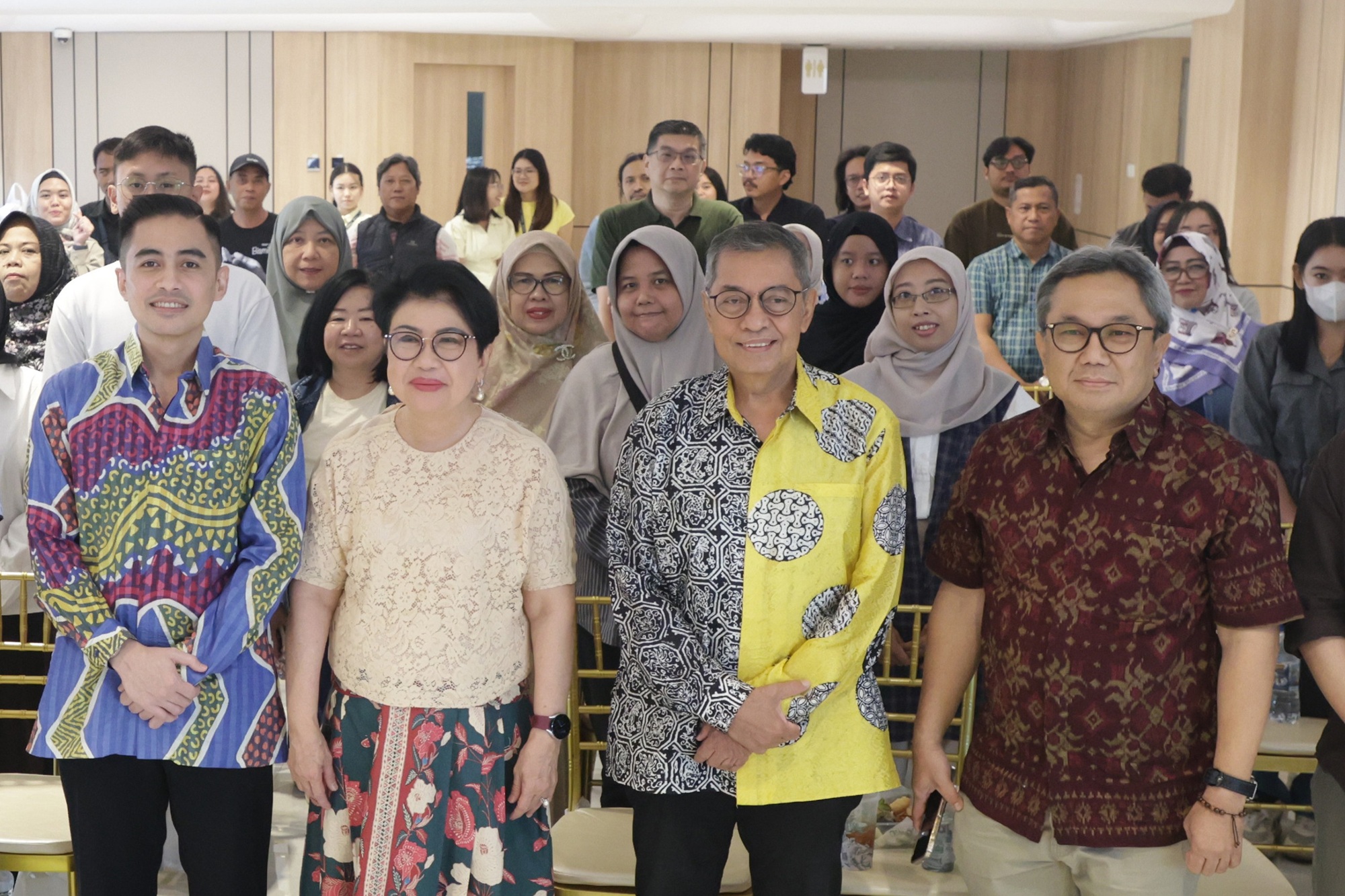
SURABAYA, Indonesia, June 20, 2026 — PT Daewoong Pharmaceutical Indonesia (“Daewoong”) held a patient health talk show in collaboration with Siloam Hospitals Surabaya to emphasize the importance of early screening and continuous treatment in preventing cardiovascular and kidney complications among patients with diabetes.
The event was held under the theme “The Hidden Threat of Diabetes: Cardiovascular and Kidney Disease.” It was designed to help patients and their families understand that diabetes is not merely a matter of blood sugar control, but a serious condition that can lead to complications affecting major organs, including the heart, blood vessels, and kidneys.
Diabetes is a major public health challenge in East Java. According to the Profil Kesehatan Provinsi Jawa Timur Tahun 2023 published by the East Java Health Office, the estimated number of patients with diabetes aged 15 and older in East Java reached 854,454 in 2023. Data from the Surabaya Health Office’s Profil Kesehatan Kota Surabaya 2023 also showed that 104,363 patients with diabetes were officially recorded in Surabaya.
The first lecture was delivered by Prof. Yudi Her Oktaviono, Sp.JP(K), FIHA, a specialist in cardiology and vascular disease. He explained that heart attacks in patients with diabetes do not always come with warning symptoms such as chest pain. Prolonged high blood sugar can damage the nerves that transmit pain signals, meaning that even when a coronary artery becomes blocked, patients may not feel clear warning signs.
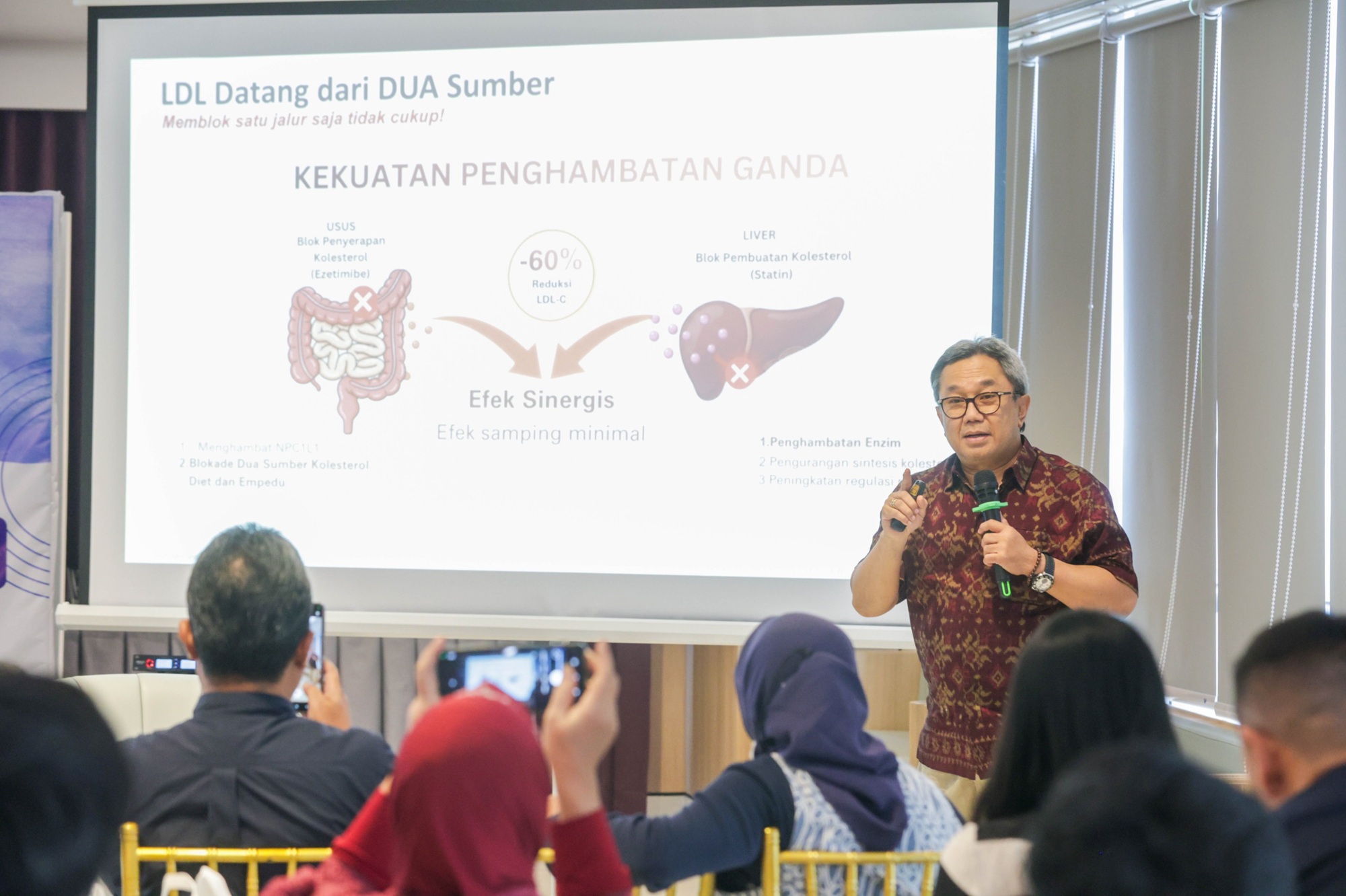
“Patients with diabetes may be exposed to cardiovascular risk without any obvious warning signs,” Prof. Yudi said. “This is why regular medical checkups and risk factor management should not be neglected, even when patients feel completely healthy.”
He also explained that diabetes can accelerate the progression of atherosclerosis, a condition in which cholesterol and other substances build up inside the blood vessel walls, causing the vessels to narrow. LDL-C, commonly known as “bad cholesterol,” can enter damaged blood vessel walls and form arterial plaque. As plaque builds up, it can narrow or block the coronary arteries, increasing the risk of heart attack and stroke.
As a core principle for cholesterol management, Prof. Yudi introduced “The Sooner, The Lower, The Better,” Daewoong’s cardiovascular disease prevention campaign message. He emphasized the importance of managing LDL-C early, lowering it sufficiently to the target levels recommended by healthcare professionals, and maintaining treatment consistently over the long term.
The second lecture was led by Dr. dr. Soebagijo Adi Soelistijo, SpPD, Subsp. EMD(K), FINASIM, FACP, an internal medicine specialist and endocrinology consultant. He addressed the risks of diabetic kidney disease, explaining that it often has no specific symptoms in the early stages and is frequently detected only after kidney function has already declined significantly.
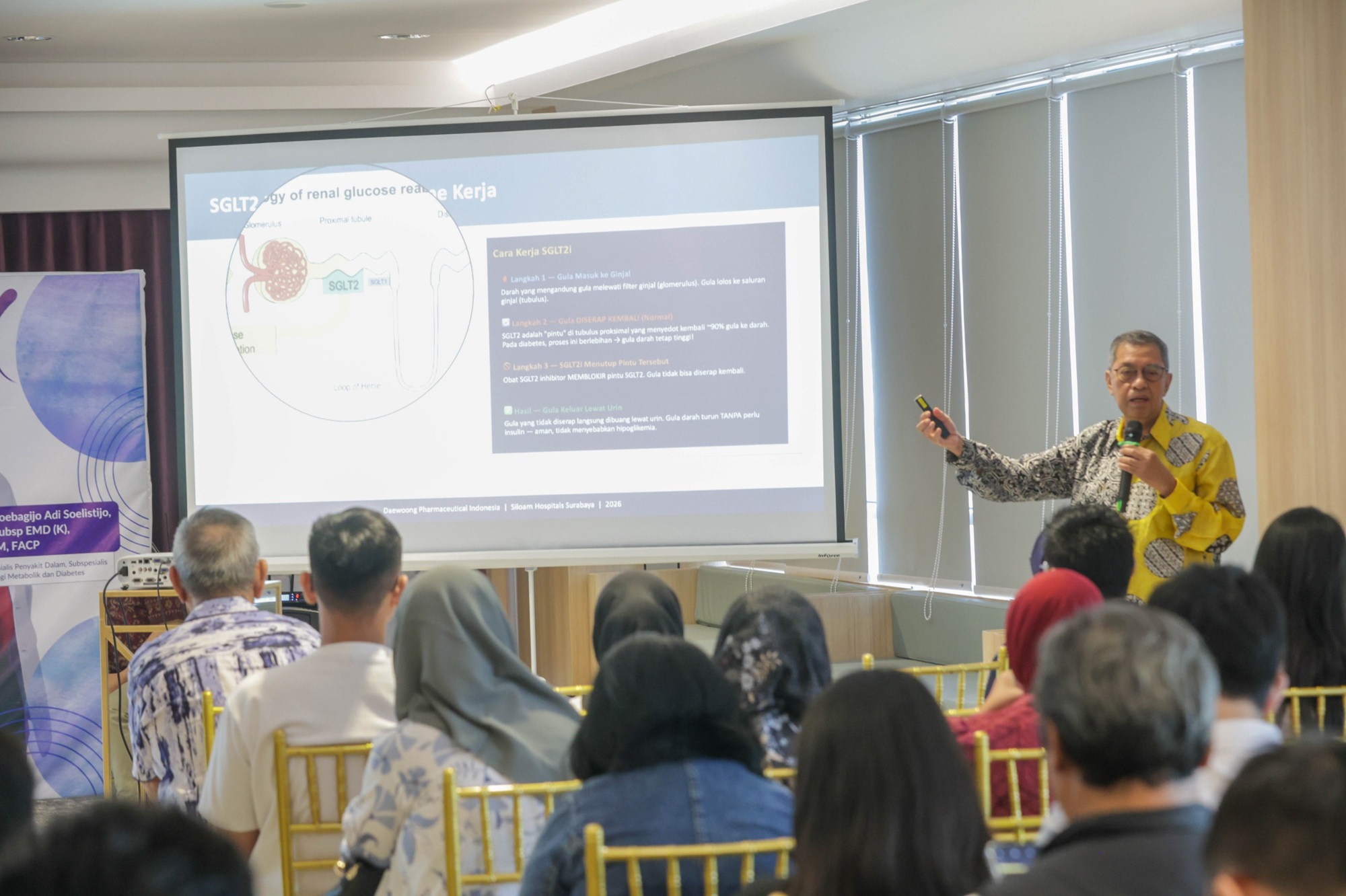
“Continuous high blood sugar can gradually damage kidney tissue, much like a filter that wears down over time,” Dr. dr. Soebagijo said. “Because patients often do not notice abnormalities in the early stages, kidney screening should be done proactively rather than waiting for symptoms to appear.”
He outlined three key tests that patients with diabetes should monitor regularly: HbA1c, UACR, and eGFR. HbA1c helps assess average blood sugar control, UACR detects small amounts of protein in the urine at an early stage, and eGFR evaluates the overall filtration function of the kidneys.
Dr. Maria Magdalena Padmidewi, Sp.PK, Director of Siloam Hospitals Surabaya, said, “Diabetes education must go beyond simply lowering blood sugar levels. Patients and their families need to understand that diabetes can silently affect the heart, kidneys, blood vessels, and overall quality of life.”
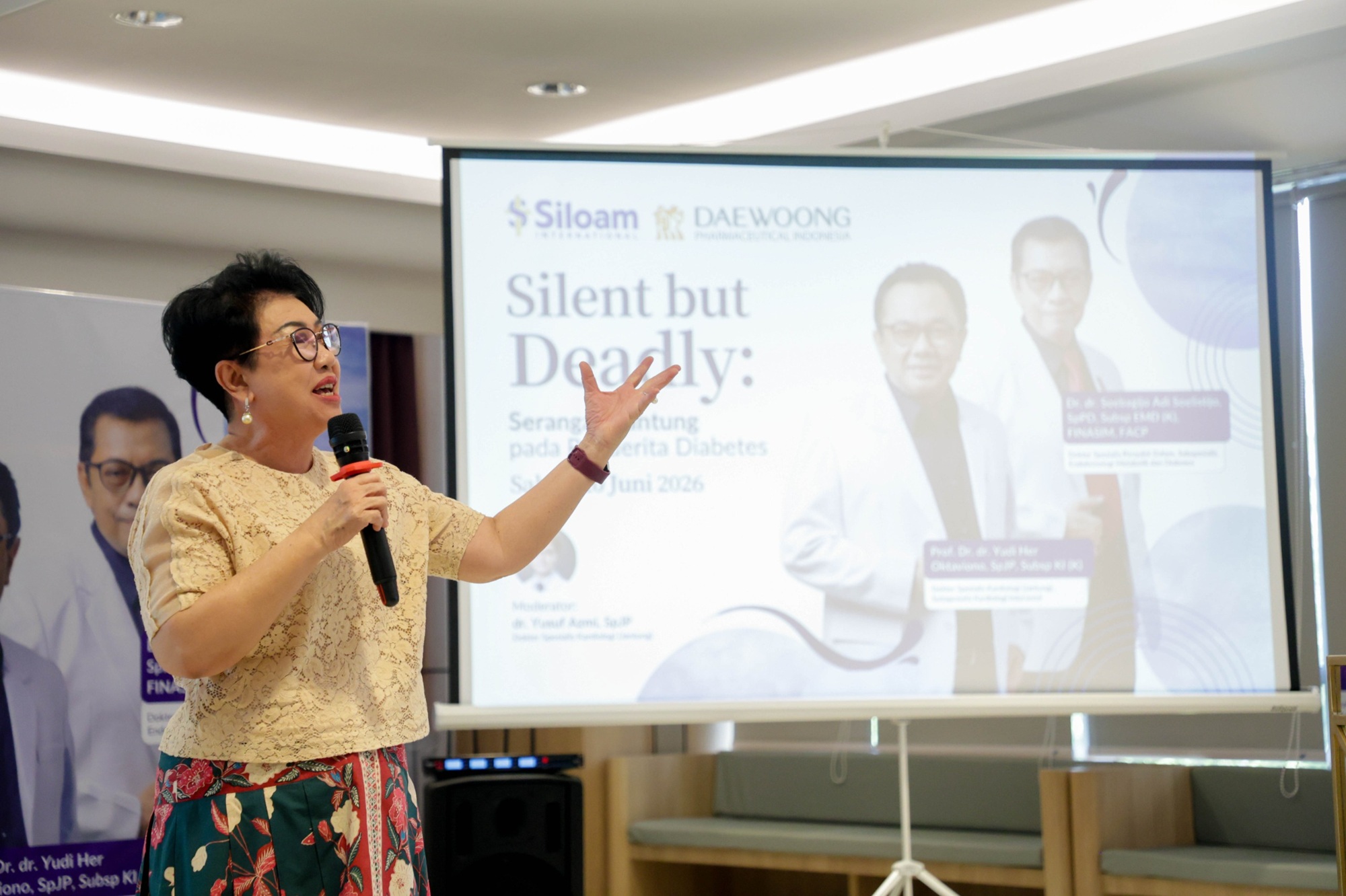
“Siloam Hospitals Surabaya is committed to supporting early diagnosis, patient education, and integrated care to help prevent complications before they become severe,” she added.
Baik In-hyun, Head of Daewoong Pharmaceutical Indonesia Business Division, said the educational initiative reflects Daewoong’s long-term commitment to supporting public health.
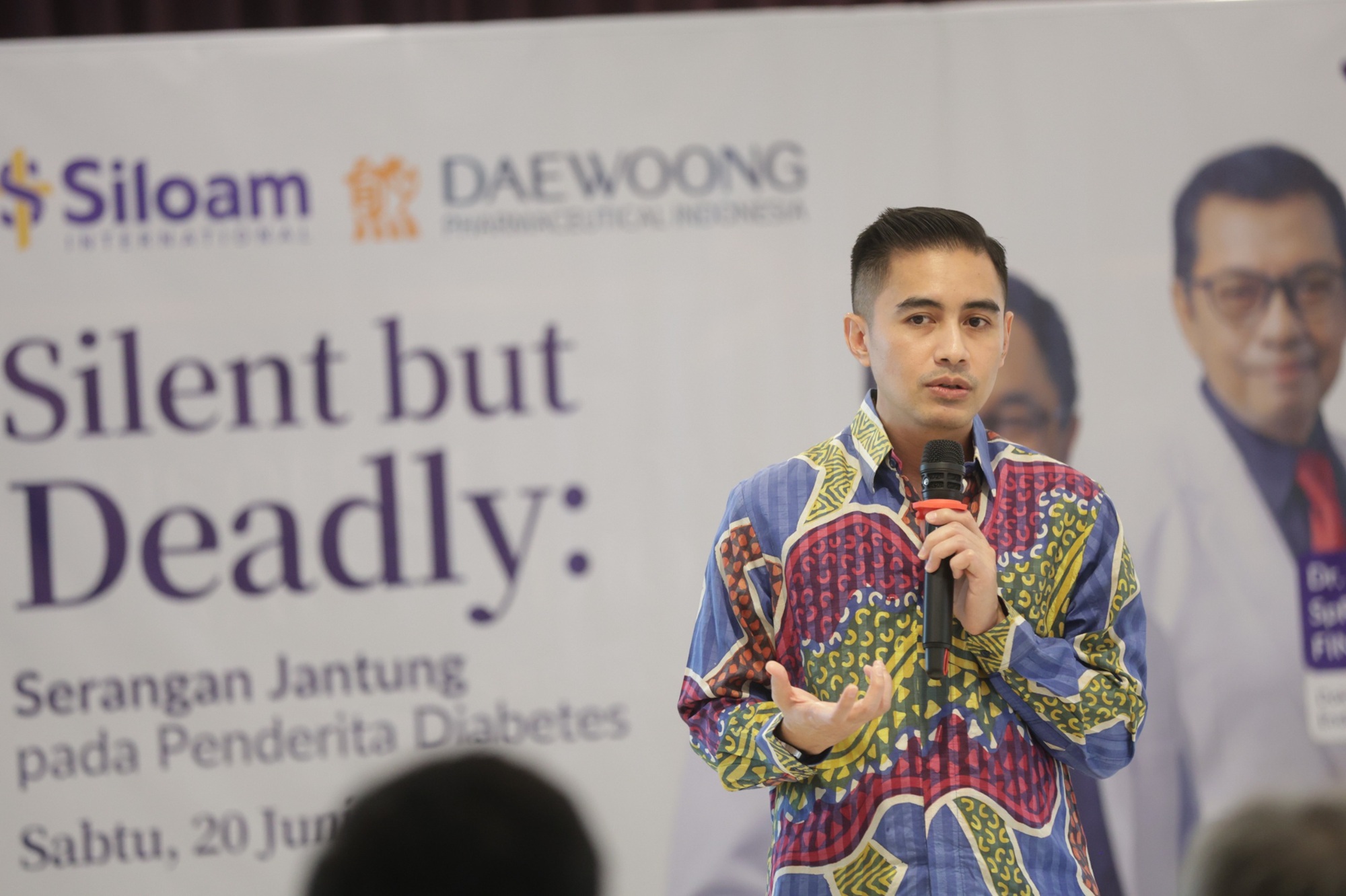
“When patients understand the connection between diabetes and its silently progressing complications at an early stage, they can begin preventive treatment before irreversible organ damage occurs,” Baek said. “Daewoong will go beyond ensuring a stable supply of innovative cardiovascular treatments and its independently developed type 2 diabetes treatment. We will continue to serve as a trusted partner in helping build healthier communities.”
Daewoong is expanding its treatment options to help patients with diabetes manage cardiovascular risks and blood sugar levels. Crezet, a dyslipidemia treatment launched in November last year, is a fixed-dose combination of ezetimibe and rosuvastatin, offering a new treatment option for patients who require strict LDL-C control.
Envlo, Daewoong’s independently developed treatment for type 2 diabetes, obtained product approval from Indonesian authorities in December last year and is scheduled for launch in the first half of this year. Moving forward, Daewoong plans to strengthen collaboration with medical institutions to raise awareness of integrated management of blood sugar, LDL-C, and kidney function in patients with diabetes, while expanding access to advanced treatment options.


Daewoong Pharmaceutical Indonesia (hereinafter referred to as the “Company”) establishes and discloses this Personal Information Processing Policy in accordance with Article 30 of the Personal Information Protection Act to protect the personal information of data subjects and to handle related complaints promptly and smoothly.
Article 1 (Purpose of Processing Personal Information)
The Company processes personal information for the following purposes. The processed personal information is not used for purposes other than the following, and if the purpose of use changes, the Company will take necessary measures such as obtaining separate consent in accordance with Article 18 of the Personal Information Protection Act.
1. Membership registration and management on the website
To confirm the intention to sign up, provide membership services, verify identity, maintain and manage membership, confirm identity for limited authentication systems, prevent unauthorized use, confirm consent from legal representatives when processing the personal information of children under 14, provide notifications and handle complaints.
2. Provision of goods or services
To deliver products, provide services, send contracts and invoices, provide customized content and services, verify identity and age, process payments and settlements, and collect receivables.
3. Complaint handling
To verify the identity of complainants, check the complaint details, contact for fact-finding and notifications, and inform results.
Article 2 (Processing and Retention Period of Personal Information)
1. The Company retains and processes personal information within the period agreed upon by the data subject or as prescribed by law.
2. Each category of personal information is processed and retained as follows:
Website membership: Until withdrawal from the company/organization site
However, in the following cases, until the relevant reason ends:
1. During investigations or legal proceedings due to violations of related laws
2. If obligations from service use (e.g., debts) remain, until they are resolved
Provision of goods or services: Until service and payment settlement is completed
However, in the following cases, until the end of the applicable retention period:
Under the Consumer Protection Act in E-commerce:
1. Records on advertisements: 6 months
- Records on contracts, cancellations, payments, and deliveries: 5 years
- Records on consumer complaints and dispute handling: 3 years
2. Under the Protection of Communications Secrets Act:
- Telecommunications records: 1 year
- Internet logs and access data: 3 months
Article 5 (Rights of Users and Legal Representatives)
1. Data subjects may exercise the following rights at any time:
- Request access to personal information
- Request correction of errors
- Request deletion
- Request suspension of processing
2. These rights may be exercised via written request, phone, email, or fax. The Company will respond promptly.
3. While a correction or deletion request is pending, the Company will not use or provide the personal data.
4. Legal representatives or agents may exercise rights with a power of attorney (Form No. 11 under the Enforcement Rules of the Act).
5. Data subjects must not infringe on their own or others’ personal information or privacy rights.
Article 6 (Personal Information Items Processed)
1. Website membership
- Required: Name, date of birth, ID, password, address, phone number, gender, email
- Optional: Marital status, interests
2. Goods or services
- Required: Same as above + payment info (credit card number, bank account, etc.)
- Optional: Interests, purchase history
3. Automatically collected info during service use:
- IP address, cookies, MAC address, service usage logs, visit records, misuse history
Article 7 (Destruction of Personal Information)
1. The Company destroys personal information without delay when the retention period has ended or processing purposes are fulfilled.
2. If data must be retained due to other laws, it will be stored in a separate DB or location.
3. Destruction procedures and methods:
- Procedure: Select data for destruction, obtain approval, then destroy
- Method: Electronic files are deleted with low-level format; paper records are shredded or incinerated
Article 8 (Measures to Ensure Security of Personal Information)
1. Administrative: Internal management plans, regular staff training2.
Technical: Access control, encryption, security programs3.
Physical: Restricted access to server and data rooms
Article 9 (Cookies)
1. The Company uses cookies to provide customized services.
2. Cookies are small data files sent from a server to a user's browser and may be stored on the user’s hard drive.
- Purpose: Analyze visit patterns, search keywords, secure connections
- Refusal: Users can reject cookies via browser settings (Tools > Internet Options > Privacy)
- Note: Refusal may affect customized services
Article 10 (Personal Information Protection Officer)
1. The Company designates a personal information protection officer responsible for overall privacy management.
- Contact
Team : Indonesia Business Team (Daewoong Pharmaceutical)
Name : Yuna Hur
E-mail : dpi.info@daewoong.co.kr
2. Users may contact this officer regarding all personal information inquiries or complaints. The Company will respond promptly.
Article 11 (Requests for Access)
Users may request access to their personal data under Article 35 of the Act through the department below:
- Contact
Team : Indonesia Business Team (Daewoong Pharmaceutical)
Name : Yuna Hur
E-mail : dpi.info@daewoong.co.kr
Article 12 (Remedies for Rights Infringement)
If your personal information rights are violated, contact the following institutions:
- Personal Information Infringement Center (KISA)
Website: privacy.kisa.or.kr | Tel: 118
Address: 3F, 9 Jinheung-gil, Naju-si, Jeollanam-do 58324, Korea
- Personal Information Dispute Mediation Committee
Website: www.kopico.go.kr | Tel: 1833-6972
Address: 4F, Government Seoul Building, 209 Sejong-daero, Jongno-gu, Seoul
- Supreme Prosecutors’ Office Cybercrime Division: 02-3480-3573 | www.spo.go.kr
- Cyber Bureau, Korean National Police Agency: Call 182 | cyberbureau.police.go.kr
Article 13 (Enforcement and Revisions)
This Personal Information Processing Policy is effective as of June 30, 2025.
제1조 목적
본 이용약관은 “대웅제약”(이하 "사이트")의 서비스의 이용조건과 운영에 관한 제반 사항 규정을 목적으로 합니다.
제2조 용어의 정의
본 약관에서 사용되는 주요한 용어의 정의는 다음과 같습니다.
① 회원 : 사이트의 약관에 동의하고 개인정보를 제공하여 회원등록을 한 자로서, 사이트와의 이용계약을 체결하고 사이트를 이용하는 이용자를 말합니다.
② 이용계약 : 사이트 이용과 관련하여 사이트와 회원간에 체결 하는 계약을 말합니다.
③ 회원 아이디(이하 "ID") : 회원의 식별과 회원의 서비스 이용을 위하여 회원별로 부여하는 고유한 문자와 숫자의 조합을 말합니다.
④ 비밀번호 : 회원이 부여받은 ID와 일치된 회원임을 확인하고 회원의 권익 보호를 위하여 회원이 선정한 문자와 숫자의 조합을 말합니다.
⑤ 운영자 : 서비스에 홈페이지를 개설하여 운영하는 운영자를 말합니다.
⑥ 해지 : 회원이 이용계약을 해약하는 것을 말합니다.
제3조 약관 외 준칙
운영자는 필요한 경우 별도로 운영정책을 공지 안내할 수 있으며, 본 약관과 운영정책이 중첩될 경우 운영정책이 우선 적용됩니다.
제4조 이용계약 체결
① 이용계약은 회원으로 등록하여 사이트를 이용하려는 자의 본 약관 내용에 대한 동의와 가입신청에 대하여 운영자의 이용승낙으로 성립합니다.
② 회원으로 등록하여 서비스를 이용하려는 자는 사이트 가입신청 시 본 약관을 읽고 아래에 있는 "동의합니다"를 선택하는 것으로 본 약관에 대한 동의 의사 표시를 합니다.
제5조 서비스 이용 신청
① 회원으로 등록하여 사이트를 이용하려는 이용자는 사이트에서 요청하는 제반정보(이용자ID,비밀번호, 닉네임 등)를 제공해야 합니다.
② 타인의 정보를 도용하거나 허위의 정보를 등록하는 등 본인의 진정한 정보를 등록하지 않은 회원은 사이트 이용과 관련하여 아무런 권리를 주장할 수 없으며, 관계 법령에 따라 처벌받을 수 있습니다.
제6조 개인정보처리방침
사이트 및 운영자는 회원가입 시 제공한 개인정보 중 비밀번호를 가지고 있지 않으며 이와 관련된 부분은 사이트의 개인정보처리방침을 따릅니다.
운영자는 관계 법령이 정하는 바에 따라 회원등록정보를 포함한 회원의 개인정보를 보호하기 위하여 노력합니다.
회원의 개인정보보호에 관하여 관계법령 및 사이트가 정하는 개인정보처리방침에 정한 바에 따릅니다.
단, 회원의 귀책 사유로 인해 노출된 정보에 대해 운영자는 일체의 책임을 지지 않습니다.
운영자는 회원이 미풍양속에 저해되거나 국가안보에 위배되는 게시물 등 위법한 게시물을 등록 · 배포할 경우 관련 기관의 요청이 있을 시 회원의 자료를 열람 및 해당 자료를 관련 기관에 제출할 수 있습니다.
제7조 운영자의 의무
① 운영자는 이용회원으로부터 제기되는 의견이나 불만이 정당하다고 인정할 경우에는 가급적 빨리 처리하여야 합니다. 다만, 개인적인 사정으로 신속한 처리가 곤란한 경우에는 사후에 공지 또는 이용회원에게 쪽지, 전자우편 등을 보내는 등 최선을 다합니다.
② 운영자는 계속적이고 안정적인 사이트 제공을 위하여 설비에 장애가 생기거나 유실된 때에는 이를 지체 없이 수리 또는 복구할 수 있도록 사이트에 요구할 수 있습니다. 다만, 천재지변 또는 사이트나 운영자에 부득이한 사유가 있는 경우, 사이트 운영을 일시 정지할 수 있습니다.
제8조 회원의 의무
① 회원은 본 약관에서 규정하는 사항과 운영자가 정한 제반 규정, 공지사항 및 운영정책 등 사이트가 공지하는 사항 및 관계 법령을 준수하여야 하며, 기타 사이트의 업무에 방해가 되는 행위, 사이트의 명예를 손상하는 행위를 해서는 안 됩니다.
② 회원은 사이트의 명시적 동의가 없는 한 서비스의 이용 권한, 기타 이용계약상 지위를 타인에게 양도, 증여할 수 없으며, 이를 담보로 제공할 수 없습니다.
③ 이용고객은 아이디 및 비밀번호 관리에 상당한 주의를 기울여야 하며, 운영자나 사이트의 동의 없이 제3자에게 아이디를 제공하여 이용하게 할 수 없습니다.
④ 회원은 운영자와 사이트 및 제3자의 지적 재산권을 침해해서는 안 됩니다.
제9조 서비스 이용 시간
① 서비스 이용 시간은 업무상 또는 기술상 특별한 지장이 없는 한 연중무휴 1일 24시간을 원칙으로 합니다. 단, 사이트는 시스템 정기점검, 증설 및 교체를 위해 사이트가 정한 날이나 시간에 서비스를 일시중단 할 수 있으며 예정된 작업으로 인한 서비스 일시 중단은 사이트의 홈페이지에 사전에 공지하오니 수시로 참고하시길 바랍니다.
② 단, 사이트는 다음 경우에 대하여 사전 공지나 예고 없이 서비스를 일시적 혹은 영구적으로 중단할 수 있습니다.
- 긴급한 시스템 점검, 증설, 교체, 고장 혹은 오동작을 일으키는 경우
- 국가비상사태, 정전, 천재지변 등의 불가항력적인 사유가 있는 경우
- 전기통신사업법에 규정된 기간통신사업자가 전기통신 서비스를 중지한 경우
- 서비스 이용의 폭주 등으로 정상적인 서비스 이용에 지장이 있는 경우
③ 전항에 의한 서비스 중단의 경우 사이트는 사전에 공지사항 등을 통하여 회원에게 통지합니다. 단, 사이트가 통제할 수 없는 사유로 발생한 서비스의 중단에 대하여 사전공지가 불가능한 경우에는 사후공지로 대신합니다.
제10조 서비스 이용 해지
① 회원이 사이트와의 이용계약을 해지하고자 하는 경우에는 회원 본인이 온라인을 통하여 등록해지 신청을 하여야 합니다. 한편, 사이트 이용 해지와 별개로 사이트에 대한 이용계약 해지는 별도로 하셔야 합니다.
② 해지 신청과 동시에 사이트가 제공하는 사이트 관련 프로그램이 회원 관리 화면에서 자동적으로 삭제됨으로 운영자는 더 이상 해지신청자의 정보를 볼 수 없습니다.
제11조 서비스 이용 제한
회원은 다음 각호에 해당하는 행위를 하여서는 아니 되며 해당 행위를 한 경우에 사이트는 회원의 서비스 이용 제한 및 적법한 조치를 할 수 있으며 이용계약을 해지하거나 기간을 정하여 서비스를 중지할 수 있습니다.
① 회원 가입시 혹은 가입 후 정보 변경 시 허위 내용을 등록하는 행위
② 타인의 사이트 이용을 방해하거나 정보를 도용하는 행위
③ 사이트의 운영진, 직원 또는 관계자를 사칭하는 행위
④ 사이트, 기타 제3자의 인격권 또는 지적재산권을 침해하거나 업무를 방해하는 행위
⑤ 다른 회원의 ID를 부정하게 사용하는 행위
⑥ 다른 회원에 대한 개인정보를 그 동의 없이 수집, 저장, 공개하는 행위
⑦ 범죄와 결부된다고 객관적으로 판단되는 행위
⑧ 기타 관련 법령에 위배되는 행위제
12조 게시물의 관리
① 사이트의 게시물과 자료의 관리 및 운영의 책임은 운영자에게 있습니다. 운영자는 항상 불량 게시물 및 자료에 대하여 모니터링을 하여야 하며, 불량 게시물 및 자료를 발견하거나 신고를 받으면 해당 게시물 및 자료를 삭제하고 이를 등록한 회원에게 주의를 주어야 합니다.
한편, 이용회원이 올린 게시물에 대해서는 게시자 본인에게 책임이 있으니 회원 스스로 본 이용약관에서 위배되는 게시물은 게재해서는 안 됩니다.
② 정보통신윤리위원회 등 공공기관의 시정요구가 있는 경우 운영자는 회원의 사전동의 없이 게시물을 삭제하거나 이동 할 수 있습니다.
③ 불량게시물의 판단기준은 다음과 같습니다.
- 다른 회원 또는 제3자에게 심한 모욕을 주거나 명예를 손상하는 내용인 경우
- 공공질서 및 미풍양속에 위반되는 내용을 유포하거나 링크 시키는 경우
- 불법 복제 또는 해킹을 조장하는 내용인 경우
- 영리를 목적으로 하는 광고일 경우
- 범죄와 결부된다고 객관적으로 인정되는 내용일 경우
- 다른 이용자 또는 제3자와 저작권 등 기타 권리를 침해하는 경우
- 기타 관계 법령에 위배된다고 판단되는 경우
④ 사이트 및 운영자는 게시물 등에 대하여 제3자로부터 명예훼손, 지적재산권 등의 권리 침해를 이유로 게시중단 요청을 받은 경우 이를 임시로 게시 중단(전송중단)할 수 있으며, 게시중단 요청자와 게시물 등록자 간에 소송, 합의 기타 이에 준하는 관련 기관의 결정 등이 이루어져 사이트에 접수된 경우 이에 따릅니다.
제13조 게시물의 보관
사이트 운영자가 불가피한 사정으로 본 사이트를 중단하게 될 경우, 회원에게 사전 공지를 하고 게시물의 이전이 쉽도록 모든 조치를 하기 위해 노력합니다.
제14조 게시물에 대한 저작권
① 회원이 사이트 내에 게시한 게시물의 저작권은 게시한 회원에게 귀속됩니다. 또한 사이트는 게시자의 동의 없이 게시물을 상업적으로 이용할 수 없습니다. 다만 비영리 목적인 경우는 그러하지 아니하며, 또한 서비스 내의 게재권을 갖습니다.
② 회원은 서비스를 이용하여 취득한 정보를 임의 가공, 판매하는 행위 등 서비스에 게재된 자료를 상업적으로 사용할 수 없습니다.
③ 운영자는 회원이 게시하거나 등록하는 사이트 내의 내용물, 게시 내용에 대해 제12조 각호에 해당한다고 판단되는 경우 사전통지 없이 삭제하거나 이동 또는 등록 거부할 수 있습니다.
제15조 손해배상
① 본 사이트의 발생한 모든 민, 형법상 책임은 회원 본인에게 1차적으로 있습니다.
② 본 사이트로부터 회원이 받은 손해가 천재지변 등 불가항력적이거나 회원의 고의 또는 과실로 인하여 발생한 때에는 손해배상을 하지 않습니다.
제16조 면책
① 운영자는 회원이 사이트의 서비스 제공으로부터 기대되는 이익을 얻지 못하였거나 서비스 자료에 대한 취사선택 또는 이용으로 발생하는 손해 등에 대해서는 책임이 면제됩니다.
② 운영자는 본 사이트의 서비스 기반 및 타 통신업자가 제공하는 전기통신 서비스의 장애로 인한 경우에는 책임이 면제되며 본 사이트의 서비스 기반과 관련되어 발생한 손해에 대해서는 사이트의 이용약관에 준합니다
③ 운영자는 회원이 저장, 게시 또는 전송한 자료와 관련하여 일체의 책임을 지지 않습니다.
④ 운영자는 회원의 귀책 사유로 인하여 서비스 이용의 장애가 발생한 경우에는 책임지지 아니합니다.
⑤ 운영자는 회원 상호 간 또는 회원과 제3자 상호 간, 기타 회원의 본 서비스 내외를 불문한 일체의 활동(데이터 전송, 기타 커뮤니티 활동 포함)에 대하여 책임을 지지 않습니다.
⑥ 운영자는 회원이 게시 또는 전송한 자료 및 본 사이트로 회원이 제공받을 수 있는 모든 자료들의 진위, 신뢰도, 정확성 등 그 내용에 대해서는 책임지지 아니합니다.
⑦ 운영자는 회원 상호 간 또는 회원과 제3자 상호 간에 서비스를 매개로 하여 물품거래 등을 한 경우에 그로부터 발생하는 일체의 손해에 대하여 책임지지 아니합니다.
⑧ 운영자는 운영자의 귀책 사유 없이 회원간 또는 회원과 제3자간에 발생한 일체의 분쟁에 대하여 책임지지 아니합니다.
⑨ 운영자는 서버 등 설비의 관리, 점검, 보수, 교체 과정 또는 소프트웨어의 운용 과정에서 고의 또는 고의에 준하는 중대한 과실 없이 발생할 수 있는 시스템의 장애, 제3자의 공격으로 인한 시스템의 장애, 국내외의 저명한 연구기관이나 보안 관련 업체에 의해 대응 방법이 개발되지 아니한 컴퓨터 바이러스 등의 유포나 기타 운영자가 통제할 수 없는 불가항력적 사유로 인한 회원의 손해에 대하여 책임지지 않습니다.
부칙
이 약관은 25.06.02부터 시행합니다.


%20(1).JPG)
.jpg)